
In an era where history is written by the powerful, we’re compelled to confront the unsettling truth that the shadows of power and oppression continue to loom large over the present. The echoes of colonization, systemic injustice, and the devastating impact of concentrated power resonate deeply, offering a stark reminder of humanity’s capacity for both greatness and cruelty. As a Muslim from a formerly colonized country, my travels especially in the past 12 months in countries like Bosnia, Australia, Cambodia, Japan, and South Africa, have led me to notice patterns I can’t ignore—patterns that starkly reflect what is happening around the world in places like Gaza today. This exploration delves into the nuanced complexities of these themes, weaving together historical events, personal stories, and the sobering realities of modern conflicts to offer a more comprehensive understanding of our shared history.
A Poignant Question to a former South African Prisoner
South Africa’s apartheid regime showcased the brutal enforcement of racial segregation and discrimination, institutionalizing the oppression of the non-white population. The experiences shared by figures like Nelson Mandela, who endured unimaginable suffering under this regime, illustrate the resilience of the human spirit in the face of systemic injustice. Three decades after apartheid ‘ended’ the entrenched division is still observed in the dining scenes or hotels at nicer establishments, where typically, most of the patrons are white, and most serving are black. It is hard to travel through South Africa without the consequences of this history being vividly apparent even today when juxtaposing the congested townships built with makeshift materials alongside the beautiful villas overlooking pristine beaches.
During a visit to Robben Island, the infamous prison where Nelson Mandela was held, a tour guide named Tom, a former political prisoner of 12 years, was asked about his views on the “apartheid-like” conditions in Gaza today. This question, posed in the shadows of cells that once held those who fought against segregation and oppression in South Africa, offered a powerful moment of reflection. I was curious as Tom, with the authority of someone who endured the brutality of apartheid firsthand, did not maintain exclusive rights to the term ‘apartheid’ but did the very opposite. He drew parallels between his experiences and the ongoing situation in Gaza. His response did not shy away from recognizing the similarities, pointing to the illegal occupation and apartheid by the Israeli government as yet another manifestation of how power can be wielded to oppress and divide and is not dissimilar to countless examples still happening today.
In Gaza, the contemporary struggle echoes the pain of past injustices. The conflict has resulted in the loss of over 28,000 lives since October, with innocent civilians bearing the brunt of a seemingly endless cycle of violence. The stark contrast between the daily realities faced by those in Gaza and the principles of human rights and dignity underscores a global failure to learn from the past. It is somewhat befitting as South Africa with its rich history, challenges and progress has been the one to seek justice for Palestine by taking the Israeli government to the International Court of Justice for genocide.
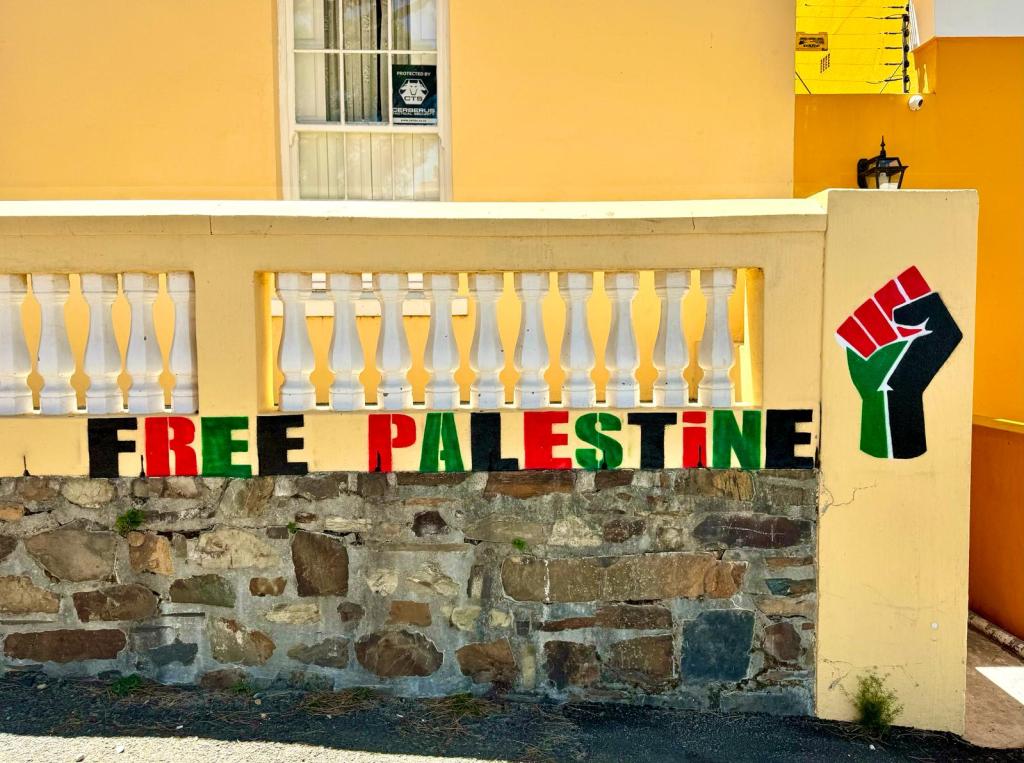
Solidarity shown to Palestine in the Bo-Kaap neighborhood, a formerly racially segregated neighborhood in Cape Town
The Enduring Impact of Colonization
Colonization has left an indelible mark on nations and cultures not just in South Africa but around the globe, with the British colonization of Australia serving as another poignant example. The arrival of the British Fleet at Botany Bay in 1788 marked the beginning of a deeply traumatic period for Indigenous Australians, characterized by land theft, cultural destruction, and the initiation of policies that led to the Stolen Generations. 1000 generations are how many the indigenous people of Australia lived before the British arrived. Then, the indigenous populations were decimated, their connection to land and culture eroded by policies that sought to assimilate and erase their identities. Many indigenous people consider the colonizers in Australia as those who overstayed their agreement. While many Australian activities commence with a recognition to those who are the original owners of the land (e.g. our Australian Open matches, our flight landing, etc.), the indigenous people are still fighting for their equitable share of representation and resources – just as the black South Africans are doing. This dark chapter in Australia’s history is a testament to the devastating effects that colonization has had around the world, highlighting the urgent need for recognition, reconciliation, and healing.
The Human Cost of Conflict and Genocide
Two countries I would not have expected to have traveled to these past 12 months were also some of the most beautiful – Bosnia and Cambodia. Turning to Bosnia in the early 1990s, the world witnessed the horrors of genocide unfold in real-time. The Serb forces’ systematic campaign against Bosniak Muslims was marked by the siege of Sarajevo and the Srebrenica massacre, where over 8,000 men and boys were killed in what was supposed to be a UN-protected safe area. This genocide, recognized as the worst atrocity on European soil since World War II, underscores the devastating consequences of ethnic hatred and nationalism gone awry. Similarly, the tragic history of Cambodia, particularly during the Khmer Rouge regime in the late 1970s, exemplifies the severe human cost of conflict and genocide. The mass killings and forced labor under Pol Pot led to the deaths of an estimated 1.7 million people. Pol Pot’s regime targeted intellectuals, professionals, and educated individuals to create an agrarian society, showcasing the suffering inflicted by extremist regimes through systematic persecution based on education and social status. Both Bosnia and Cambodia serve as stark reminders of the dangers of concentrated power and how those in authority may employ divisive tactics to separate and marginalize people, further emphasizing the necessity for vigilance and collective action to counteract such strategies and protect the most vulnerable.
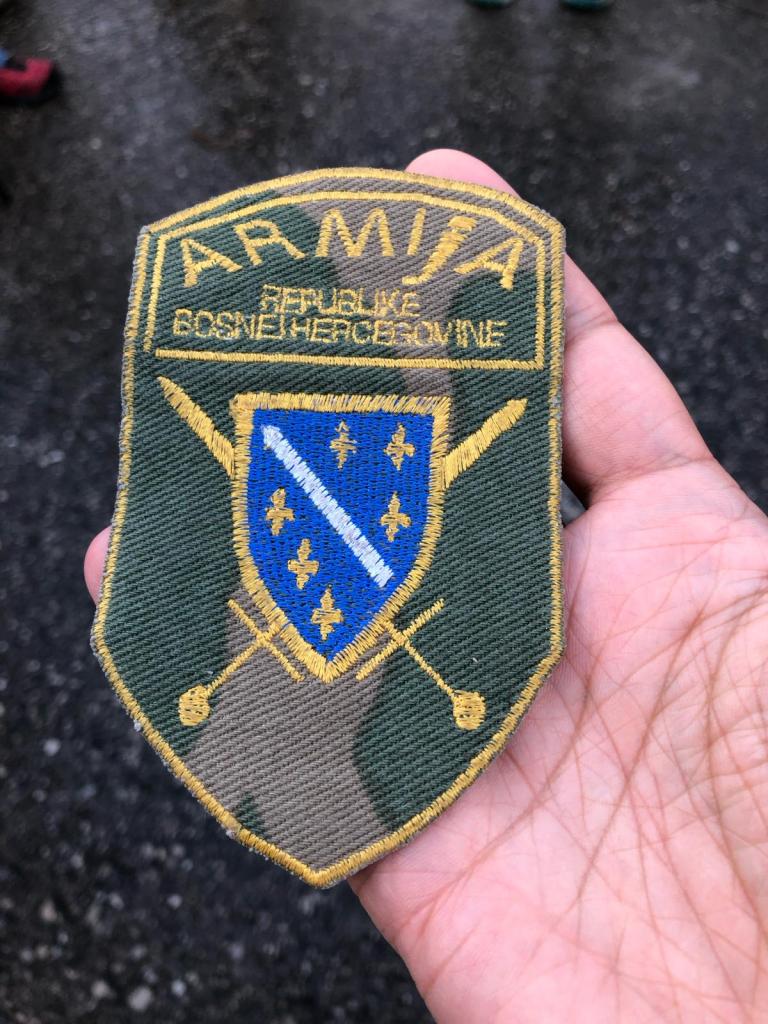
Military badge owned by a soldier who fought in Mostar in the war from ’91-‘93
The United States and Its Global Impact
While Britain and other Western countries historically relied on colonization and slavery as core strategies, beginning in the mid-20th century and continuing today, the United States has been actively engaging in a different form of world dominance that invariably has the same outcome of dehumanizing others for self-preservation. From General Curtis LeMay’s firebombing campaign over Japan, which culminated in the nuclear attacks on Hiroshima and Nagasaki, killing over 200,000 civilians, to using its political and military influence support for Israel in conducting another genocide, America’s military and political actions have had profound global impacts. This support, including over $3.8 billion in military aid annually and as much as $260 billion since World War 2[1], has sparked debates about the moral responsibilities of powerful nations in international conflicts. The consequences of these actions, often measured in human lives, highlight the complex interplay between national interests and global ethics.
Nuclear Warfare: Humanity’s Pandora’s Box
The atomic bombings of Hiroshima and Nagasaki represent a moment in history when humanity unlocked a devastating power that could end civilization as we know it. The Peace Memorial and Museum in Hiroshima stand as a somber reminder of the immediate and long-term horrors of nuclear warfare. The survivors, known as Hibakusha, and their descendants continue to live with the physical and psychological scars of those fateful days. Their stories, along with the stark statistics of casualties and suffering, serve as a powerful testament to the dangers of concentrated power and the imperative to pursue peace and disarmament.
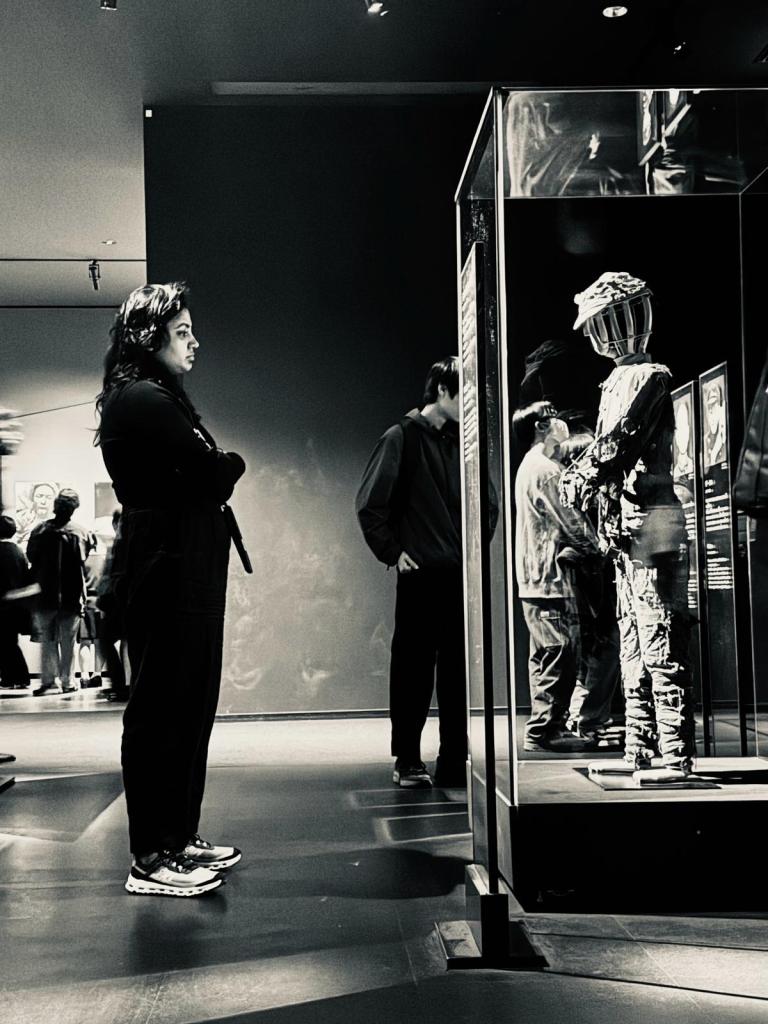
Manya facing a boy who lost his life due to the radiation in Hiroshima, Japan
The Role of Greed and Self-Preservation
In the shadows of history’s most grievous episodes, from the corridors of Robben Island’s prison museum to the war-scarred landscapes of Bosnia, a common narrative emerges, transcending the specifics of race, culture, or geography. Conversations with those who endured these crucibles of human conflict reveal a profound insight: the driving forces behind such atrocities were not rooted in ethnic or racial animosity but were fueled by greed and the relentless pursuit of self-preservation by those in power. This realization forces us to confront the unsettling truth about the nature of human conflict and the recurring themes of greed and survival at the expense of others.
In South Africa, apartheid was not just a system of racial segregation but also a mechanism for economic exploitation, where the minority white population maintained control over the majority black population to preserve their economic status and way of life. Similarly, in Bosnia, while ethnic tensions were certainly exploited, Sheva, who fought in the ’93 war for two years, was solemn as he recounted how Croats and Bosnians lived, married, and played together for decades. He argued the root causes of conflict was the greed and the quest for power by those in charge and used division as a tactic.
These reflections underscore a broader, more unsettling reality: throughout history, the dehumanization of others has often been justified by the pursuit of wealth and security for a select few. This pattern of behavior reflects a fundamental aspect of human nature that, when unchecked, can lead to devastating consequences.
Power, Responsibility, and the Path Forward
As we reflect on these narratives, we’re reminded that history is not merely a series of isolated events but a continuum that shapes and is shaped by the present. I now no longer think of history as history, but just as other examples of what is happening today. The lessons of the past, from the colonization of Australia to the atomic bombings in Japan and the ongoing conflict in Gaza, emphasize the need for vigilance, empathy, and a steadfast commitment to justice.
In crafting a future where such atrocities are no longer repeated, we must strive for a world that values every human life, recognizes our shared humanity, and works tirelessly to prevent the concentration of power from undermining the principles of equality and peace. This journey requires us to confront uncomfortable truths, challenge the status quo, and forge a path towards a more just and compassionate world.
Despite the grim lessons of history, conversations with survivors and the examination of past injustices also reveal pathways to healing and progress. Three key learnings stand out as essential components for building a more just and equitable world:
- Accountability for Survivors: Recognizing and holding accountable those responsible for perpetrating injustices is crucial for the healing process. Survivors of apartheid, genocide, and other forms of systemic oppression emphasize the importance of accountability, not only as a means of achieving justice but also as a necessary step towards reconciliation and the prevention of future atrocities.
- Importance of Resource Reallocation: Addressing the economic disparities and the unequal distribution of resources that often underlie conflicts is essential for creating sustainable peace. By focusing on equitable resource reallocation, societies can move towards addressing the root causes of greed and self-preservation that drive conflict, thereby fostering a more inclusive and harmonious social order.
- Power Distribution and Democratization: The concentration of power in the hands of a few is a recurring theme in the narratives of oppression and conflict. Ensuring a more democratic distribution of power, where all members of society have a voice and a stake in decision-making processes, is fundamental to preventing the abuse of power and the marginalization of vulnerable communities.
[1] How Much Aid Does the U.S. Give to Israel? | Best Countries | U.S. News (usnews.com)




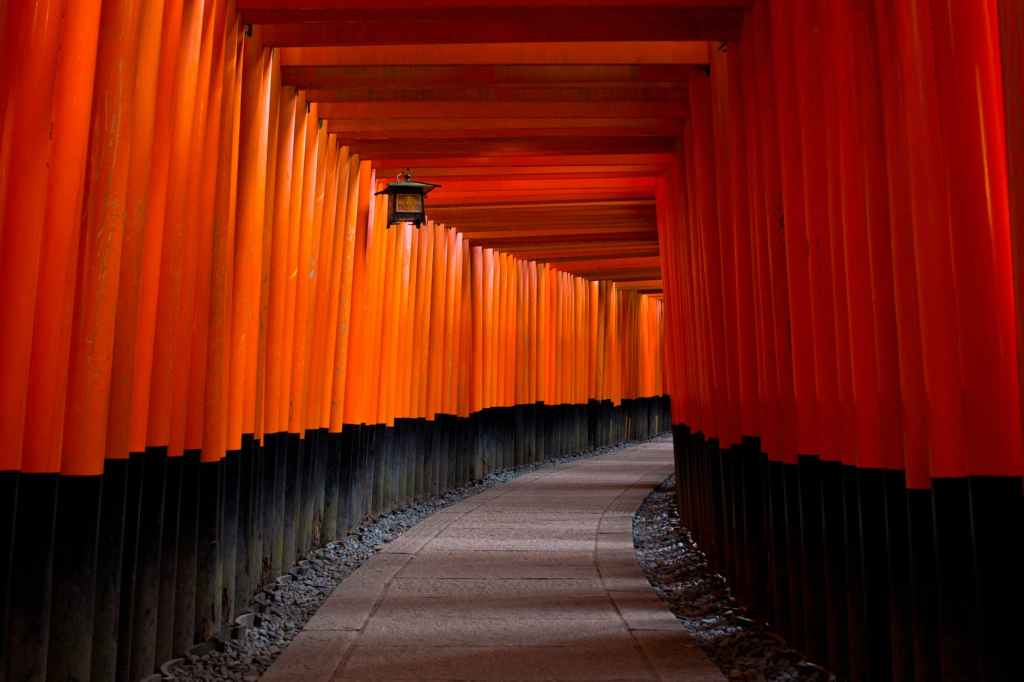
 Hassan and Manya
Leave a comment